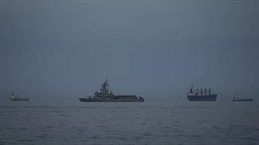
Very few vessels have passed through the Strait of Hormuz since the war in Iran began a week and a half ago, effectively shutting one of the world's most critical energy corridors and slowing global oil flows. The near‑total halt to tanker movements is already pushing up oil prices and raising alarms across energy and transport markets, according to new analysis from Freightos.
"The closure of the Strait of Hormuz is a global concern because it is stifling oil tanker movements, slowing production and contributing to rising oil prices," said Judah Levine, head of research at Freightos.
The U.S. International Development Finance Corporation has announced plans to insure vessel transits through the strait despite the security risks. But Levine noted that uptake is likely to be limited without naval escorts. "The government is much more likely to devote these resources to oil tankers than to container flows," he said.
Container market impact remains limited but growing
For container shipping, the immediate disruptions are largely confined to boxes already en route to or stuck in Gulf ports, though knock‑on congestion is emerging elsewhere.
Freightos said ports in India and Bangladesh — both major exporters to Gulf states — are reporting backlogs, while yard utilization is rising at transshipment hubs in the Far East as Gulf‑bound containers are diverted.
"Yard density at these ports could increase in the coming days as shippers who initially took a wait‑and‑see approach decide to divert Gulf‑bound containers," Levine said.
Carriers are rolling out contingency plans that reroute Gulf volumes through alternative regional ports, with final delivery by road. Lines are imposing significant surcharges on containers already in transit and offering options such as storage, return to origin or change of destination — all at additional cost.
Despite these adjustments, the broader container market has not yet seen widespread disruption or rate spikes linked to the strait's closure.
Freightos said congestion at Far East hubs could cause short‑term delays for non‑Gulf cargo, but Levine said these backlogs "should be much less significant than those seen at the outset of the Red Sea crisis," given the smaller volumes involved and the suspension of new Gulf bookings.
Fuel costs emerge as the key global risk
One channel through which the crisis could affect global container shipping is fuel. The analysis noted that rising oil prices have already prompted carriers including CMA CGM and Hapag‑Lloyd to introduce emergency fuel surcharges of US$70–75/TEU for regional transits and US$150/TEU for long‑haul voyages starting March 23. Others have applied increases on select lanes.
"If oil prices remain elevated, more carriers are likely to introduce emergency surcharges," Levine said, though standard quarterly bunker adjustment factors cannot rise until Q3.
Container rates were already climbing before the crisis. The Freightos Baltic Index shows transpacific rates rising about 10% last week to US$2,022/FEU, with East Coast rates nearing US$3,000/FEU. Asia–Europe prices increased 6% to about US$2,600/FEU, and Mediterranean rates rose 2% to US$3,700/FEU.
Levine said these increases "are not likely related to the war in Iran," but instead reflect typical post‑Lunar New Year demand.
Air cargo sees sharper disruption
Air cargo has experienced more immediate and widespread impacts due to Gulf airspace closures.
Freightos noted that Qatar Airways, Emirates SkyCargo and Etihad — which together account for about 13% of global cargo capacity — were forced to suspend or sharply reduce operations as Gulf airports closed in the early days of the conflict.
Freightos Air Index data shows rates from South Asia to North America and Europe have surged about 50% since the start of the war, reaching roughly US$6.00/kg and US$4.00/kg respectively. Southeast Asia–Europe rates are up 20% to more than US$4.00/kg, while China–U.S. prices have climbed 20% to above US$7.00/kg, though some of that increase reflects post‑LNY demand.
"These disruptions are coinciding with the post‑LNY rush, which could be adding upward pressure to ex‑China rates as volumes that normally would go via the Gulf compete for long‑haul space," Levine said.
Some Gulf airports have begun partial reopenings, with the UAE establishing safe corridors allowing up to 48 departures per hour. Emirates is now operating more than half its scheduled flights, and Etihad has resumed some services, though Qatar Airways Cargo operations through Doha remain suspended. As capacity returns, rate pressure may ease.
Forwarders are also diverting Gulf‑bound cargo to alternative airports — particularly in Saudi Arabia — for onward trucking.
Tariff developments add another layer of uncertainty
In a separate development, the U.S. Court of International Trade has ordered the government to begin refunding billions of dollars in IEEPA‑based tariffs following the Supreme Court's ruling invalidating those duties.
Customs and Border Protection has requested 45 days to build an automated refund system.
Meanwhile, the Trump administration has imposed 10% global tariffs under Section 122, even as two dozen states challenge the move. Section 301 investigations to establish country‑specific tariffs are underway and expected to conclude before the Section 122 duties expire in late July.
The president has also signaled plans for additional 15% Section 122 tariffs on some countries, though no order has been issued.
Freightos noted that the current tariff environment has led some companies to consider front‑loading imports before July, though most remain cautious. The National Retail Federation's latest U.S. ocean import forecast through June is largely unchanged from pre‑SCOTUS projections, with first‑half volumes expected to be 2.5% lower than in 2025.